Greek Mountain Tea: An Ancient Herb for Modern Living
At Saint Basil Farm, I’ve seen that healing is often quiet. It happens slowly, faithfully, and close to the land. It also happens with daily routines and small habits that amount to a big difference overtime. Greek mountain tea embodies this way of life—a humble mountain herb that has nourished bodies, soothed spirits, and supported households for centuries. Many people don’t know much about this herbal tea, and since many of my friends are Greek, I thought it would be sweet to share why I love it so much and why it’s a core ingredient in The Queen Bee and Fresh Pressed Floral tea.
Known traditionally as Sideritis, Greek mountain tea has deep roots not only in ancient medicine. It’s a staple in any Greek household and meant to be shared.
What Is Greek Mountain Tea?
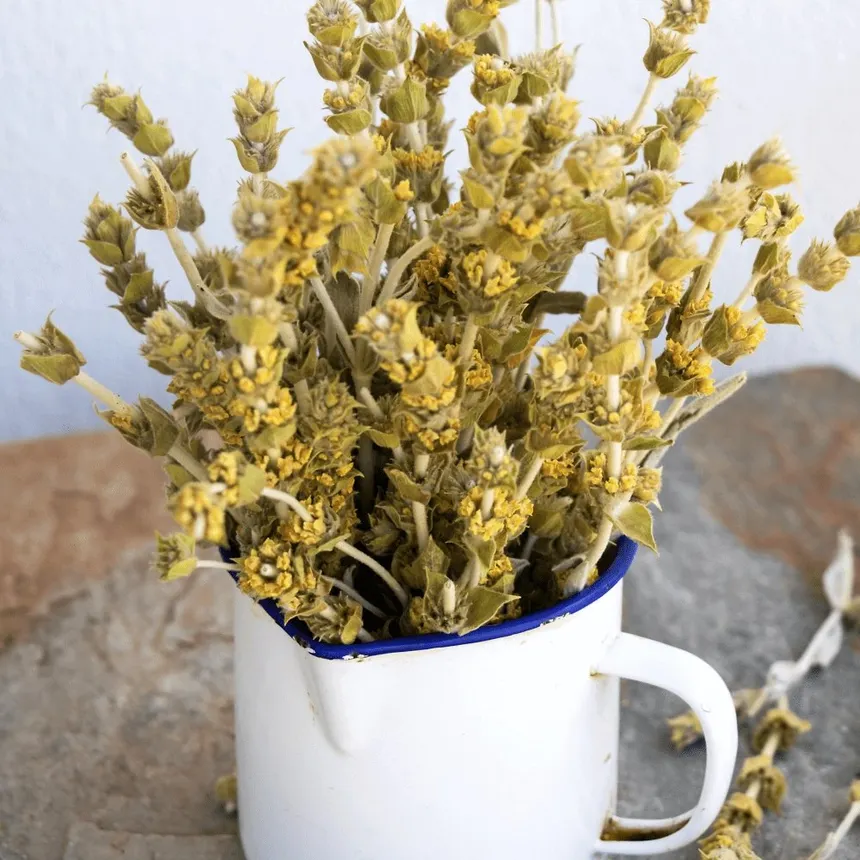
Greek mountain tea is not a true tea, but an herbal infusion made from the dried stems, leaves, and flowers of the Sideritis plant. Its name comes from the Greek word sideros, meaning “iron,” reflecting its historical use in supporting strength and healing wounds.
The plant grows wild at high elevations across Greece, often above 3,000 feet, where rocky soil, intense sun, and cold mountain air concentrate its aromatic oils and beneficial compounds. These harsh conditions produce a tea that is both gentle and resilient. Its flavor is mild and comforting, with soft floral notes and hints of wild herbs, sage, and earth.
A Tea of the Mountains and the Monasteries
In Orthodox Christian tradition, the healing of the body has always been understood as intertwined with the healing of the soul. Monasteries across Greece and Mount Athos have long cultivated herbs not as commodities, but as gifts of God—received with gratitude and used with discernment and for particular medical uses.
Greek mountain tea is commonly gathered from the surrounding hillsides and prepared as a daily infusion. It was offered to guests as an act of hospitality, served to the sick, and consumed during fasting periods when nourishment needed to be simple, warming, and restorative.
The focus for herbal medicine is always BALANCE: calming the nervous system, supporting digestion, easing inflammation, and strengthening the body so that prayer and daily labor can continue with steadiness and peace.
Traditional Uses and Gentle Support
For centuries, Greek mountain tea has been used as a household remedy to:
- Support the immune system
- Soothe coughs and respiratory discomfort
- Ease digestion and bloating
- Reduce inflammation
- Calm the nerves and promote restful sleep
It is naturally caffeine-free, making it especially suitable to enjoy at any time of the day. It is typically simmered on the stove to create a decoction that is both delicious and medicinal. Many families add honey to it as well.
At Saint Basil Farm, we value herbs that work with the body and bring it back into balance. Greek mountain tea is a perfect example of this.

How We Enjoy It at Saint Basil Farm
I like to drink Greek Mountain tea alongside German chamomile, rose petals and lavender in my blend called The Queen Bee. I originally crafted this blend specifically for a dear friend of mine opening a European-inspired bakery & cafe called Meli Bakehouse in Mount Airy, North Carolina. They have it on their menu available as a hot cup or pre-packaged for purchase, and it’s quickly become a staple and best-seller.
To prepare at home:
Option #1 Steep a cup:
- Put 1–2 teaspoons of Greek Mountain Tea (if using Queen Bee or Fresh Pressed Floral, then 1-2 teaspoons) in a tea steeper.
- Boil water at 200-212F in a hot water kettle and pour over the herbs. Cover and steep for 5-7 minutes
- Strain and enjoy! Add honey or sweetener of choice if desired.
Option #2 Make a pot for therapeutic, medicinal use:
- Place 1–2 teaspoons of Greek Mountain Tea (if using Queen Bee or Fresh Pressed Floral, then 1-2 teaspoons) per cup of water into a pot. Fill the pot with room temperature water and bring water to a gentle boil.
- Bring pot down to a simmer and let simmer for up to 30 minutes.
- Strain and add honey if desired. Enjoy!
Traditionally, it is served plain or with a small amount of raw honey and lemon. The tea grows stronger the longer it steeps, without becoming bitter.

“If you prepare food with love, it will nourish both body and soul.”
– Elder Thaddeus of Vitovnica
Greek mountain tea reminds us that true nourishment is often simple. It asks us to slow down, to receive what the earth offers, and to honor the wisdom passed down through generations.
At Saint Basil Farm, this tea reflects our commitment to traditional herbal knowledge, faithful stewardship of the land, and hospitality that nourishes both body and soul. Greek mountain tea is more than an herbal infusion—it is a small act of care, rooted in faith, history, and the mountains.